Trying to choose between a newer subdivision and an older neighborhood in Norman? You are not alone. Many buyers love the idea of newer infrastructure and a more uniform layout, but they also feel pulled toward mature trees, central convenience, and homes with more character. The good news is that in Norman, this choice is often less about which option is “better” and more about which one fits how you want to live day to day. Let’s dive in.
Why this choice matters in Norman
Norman is a large and active housing market with 131,008 residents, 57,165 housing units, a 57% owner-occupancy rate, and a median owner-occupied home value of $276,800. The city also has a relatively young median age of 34.1 and a mean commute of 24 minutes. Those numbers help explain why many buyers are weighing lifestyle, budget, and convenience very carefully.
What makes Norman especially interesting is that its housing patterns are not all the same. Some areas reflect the city’s earliest growth, while others follow newer subdivision standards and newer development trends. The result is a market where location, layout, and neighborhood feel can vary a lot from one part of town to another.
Older Norman neighborhoods at a glance
Older neighborhoods in Norman often stand out because they feel established from the moment you arrive. You may notice mature trees, less uniform street patterns, and homes built in earlier architectural styles. For many buyers, that creates a sense of place that is hard to duplicate in newer development.
In Norman’s core areas, neighborhoods like Original Townsite, Chautauqua, Miller, and Southridge reflect the city’s earlier growth periods. The city describes these areas with features like angled streets, triangular blocks, bungalow and Craftsman homes, Tudor Revival and Colonial Revival architecture, and housing stock that largely dates from the early to mid-1900s.
What older neighborhoods often offer
If you are drawn to charm and location, older neighborhoods may check a lot of boxes.
- Mature trees and established landscaping
- Distinctive architecture and less repetitive home styles
- More central access to daily destinations
- Renovation potential in homes with strong location value
- A neighborhood feel shaped over many decades
Original Townsite is a good example of this trade-off. The city notes that it is close to Main Street, the Porter and 12th Avenue commercial corridors, Norman Regional Hospital, and the University of Oklahoma, and that many daily needs can be reached by walking or biking.
Why buyers like the central location
For many people, the biggest benefit of an older neighborhood in Norman is convenience. Being closer to established commercial and civic areas can make errands simpler and reduce how often you need to drive across town. That matters in a city where most workers still drive alone.
Citywide, Norman has about 700 miles of public sidewalk, but walkability is still very neighborhood-specific. In practical terms, an older central neighborhood may offer a very different day-to-day experience than a home on the edge of newer growth areas.
Renovation potential in older areas
Older neighborhoods can also appeal to buyers who do not mind updating a home over time. If the location is strong and the home has solid character, improvements to interiors, systems, and select exterior features may help you build value while making the house fit your needs better.
This is where practical advice matters. A home with great bones in a central neighborhood can be a smart long-term fit, but you want to understand what needs work now versus later. Cosmetic updates are one thing. Major repairs or restrictions on exterior changes are another.
Historic district rules to check first
Before you assume you can fully redesign the outside of an older home, verify whether the property is in a designated historic district. In Norman, the Historic District Commission reviews proposed alterations in designated historic districts, and a Certificate of Appropriateness is required for most exterior work and demolitions in those areas.
That does not mean older homes are off-limits if you want a project. It just means you should go in with clear expectations. Interior updates and system improvements may offer more flexibility, while major exterior changes may require more review.
Newer subdivisions in Norman at a glance
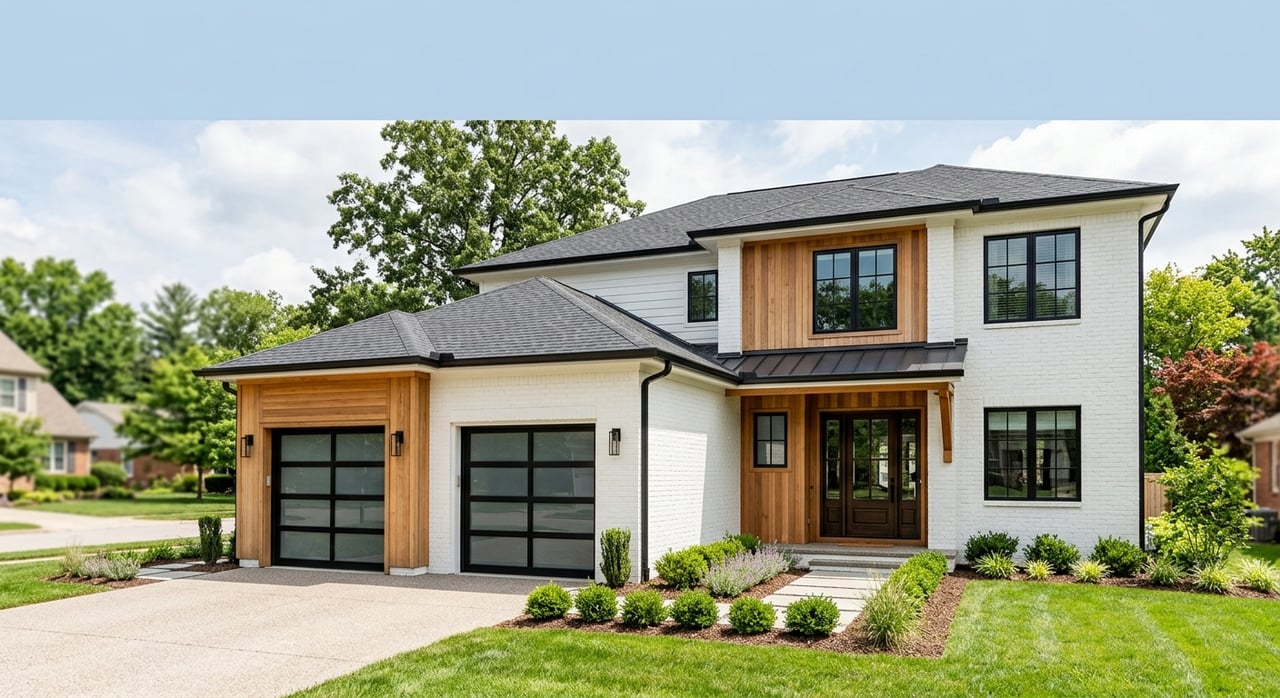
Newer subdivisions in Norman often appeal to buyers who want a more predictable layout and newer infrastructure. Streets, lots, sidewalks, and utility planning tend to follow more modern subdivision rules. That can create a more organized feel from one block to the next.
Norman’s subdivision regulations emphasize coordinated design, utility easements, tree preservation where possible, and sidewalks in most subdivisions approved after September 13, 1966. The code also ties subdivision layout to the city’s transportation plan, which helps explain why many newer areas feel more structured than the city’s oldest neighborhoods.
What newer subdivisions often offer
If you like consistency and a more standardized setting, newer subdivisions may be the better fit.
- More uniform street patterns
- Sidewalk-oriented subdivision design
- Newer infrastructure planning
- Standardized lot layouts in many areas
- A more predictable neighborhood layout from block to block
That said, “newer subdivision” does not mean just one thing in Norman. Depending on location, a newer neighborhood may be a compact infill community or a more open edge-of-city development pattern.
Not all new areas feel the same
Norman’s adopted planning direction shows that future growth is shifting toward infill, mixed use, and higher-density development instead of simple outward sprawl. At the same time, land-use materials describe eastern Norman and areas east of the 2045 Reserve as having very low-density development patterns, large-lot residential subdivisions, pastoral views, limited infrastructure connections, and commercial activity concentrated at arterial intersections.
That means a newer subdivision in Norman could offer very different daily living patterns depending on where it sits. One may feel more connected and compact. Another may feel more open and spread out, with more driving built into your routine.
The biggest difference is often location
When buyers compare newer subdivisions vs older neighborhoods in Norman, they often focus on home age first. That makes sense, but it can miss the more important question. In Norman, the biggest practical divide is often location.
Older core neighborhoods tend to be more central and character-rich. Edge growth areas often feel more open and may align more with the city’s future growth pattern, but they can also be more car-dependent and have fewer direct infrastructure connections.
Convenience and errands
If your daily routine includes frequent trips for groceries, appointments, campus access, or local shopping, central location may matter more than whether a house is old or new. Original Townsite shows how much access can shape neighborhood appeal, with proximity to commercial corridors, the hospital, and OU.
In contrast, newer edge areas may place more activity at arterial intersections and may require longer drives for routine errands. Since 70% of Norman workers drive alone, many buyers feel this trade-off most clearly in everyday convenience rather than just in commute time.
Neighborhood feel
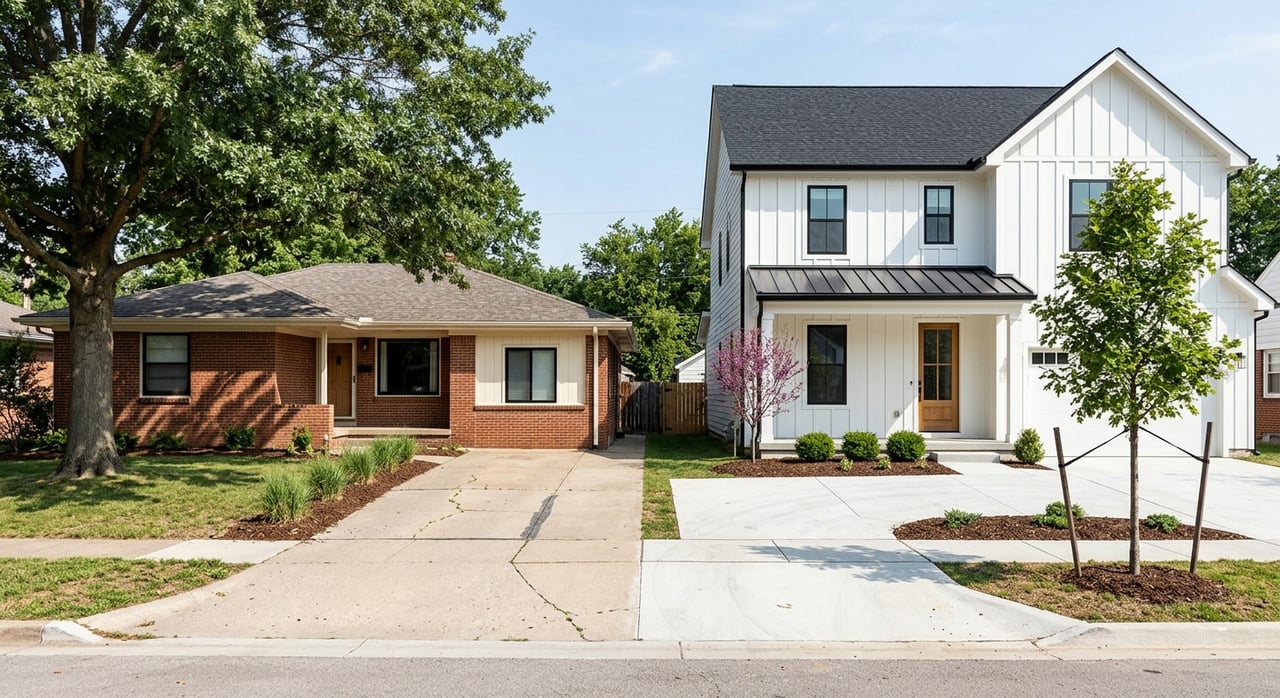
Older neighborhoods often feel more varied. Home styles, setbacks, streets, and tree cover can change from one block to the next. If you want a neighborhood with visual character and a lived-in sense of place, that variation may feel like a plus.
Newer subdivisions often feel more orderly. For some buyers, that creates peace of mind and makes the area easier to evaluate. If you prefer a more consistent look and a layout that feels straightforward, newer development may feel more comfortable.
Which option fits your priorities?
The right choice usually becomes clearer when you think about how you actually live, not just what looks good in photos. A practical home search starts with your daily habits, renovation comfort level, and how much importance you place on central access versus newer planning.
Here is a simple way to think about it.
Older neighborhoods may fit you best if you want:
- Mature trees and established surroundings
- Distinctive architecture and older home character
- A more central location near key destinations
- The chance to update a home over time
- A neighborhood with less uniformity and more history
Newer subdivisions may fit you best if you want:
- More standardized street and lot layouts
- Sidewalk-oriented subdivision design
- Newer subdivision infrastructure
- A more uniform neighborhood appearance
- A home in an area that reflects newer growth patterns
Smart questions to ask before you choose
No matter which direction you lean, a few questions can help you avoid surprises.
- How far is the home from your most common errands?
- Does the neighborhood layout support how you want to get around?
- Is the property in a historic district with exterior review requirements?
- How much updating are you comfortable taking on?
- Does the lot layout and street access work for your daily routine?
- Are you choosing based on the house alone, or the full location picture?
These questions matter because age alone does not tell the full story. In Norman, two homes built decades apart can offer very different value depending on where they are and how they match your lifestyle.
Final thoughts on Norman neighborhoods
In Norman, older neighborhoods often win on character, central access, and mature surroundings. Newer subdivisions often win on standardization, sidewalk-oriented design, and newer infrastructure. Neither is automatically the better choice.
The best fit comes down to what matters most to you once you step outside the front door. If you want help comparing location, renovation potential, and day-to-day convenience in Norman, David Deskin Realtor® offers practical, straightforward guidance to help you make a confident move.
FAQs
What is the main difference between newer subdivisions and older neighborhoods in Norman, OK?
- In Norman, the biggest difference is often location and lifestyle, not just home age. Older neighborhoods tend to offer more character and central access, while newer subdivisions often offer more standardized layouts and newer infrastructure.
Are older neighborhoods in Norman more walkable than newer subdivisions?
- Some older core neighborhoods can be more convenient for walking or biking to daily destinations, especially in central areas like Original Townsite, but walkability varies by neighborhood because Norman’s overall experience is not the same everywhere.
Do older homes in Norman have good renovation potential?
- They can, especially when the location and character are strong, but you should check the property’s condition and verify whether it is in a historic district before planning exterior changes.
What should buyers know about historic districts in Norman, OK?
- In designated historic districts, the city requires a Certificate of Appropriateness for most exterior work and demolitions, so buyers should confirm whether a property is subject to those rules before making renovation plans.
Are newer subdivisions in Norman always more convenient for daily errands?
- No. Some newer areas may be farther from routine services and have limited infrastructure connections, so it is important to compare distance to errands and street access instead of assuming newer means more convenient.
How do I choose between an older neighborhood and a newer subdivision in Norman?
- Start with your daily routine, how much home updating you are comfortable with, and whether you value central location or newer subdivision design more. Those factors usually make the right choice much clearer.